
Make AI Your Weapon
You are the biggest winner of the AI bubble. Act like it.

“We have two lives, and the second begins when we realize we only have one.”
Confucius

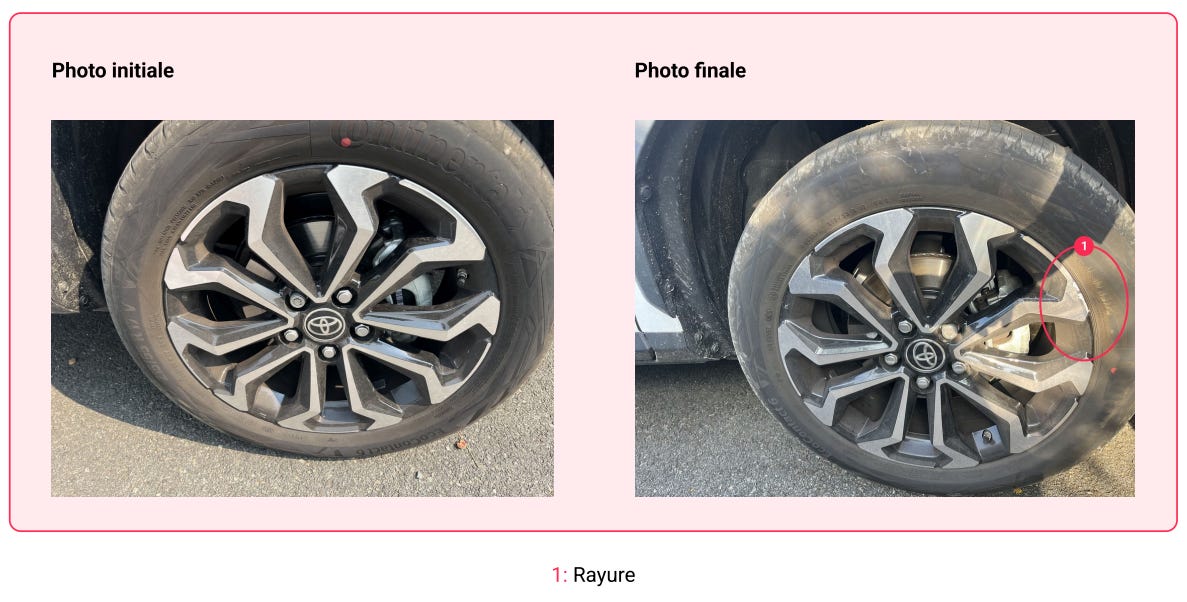
Last summer, like every summer, I went on vacation in France. One of my stops was La Rochelle, a beautiful medieval city on the Atlantic coast. I arrived by train and rented a car. Within 30 minutes, I had misjudged a curb and scraped the wheel.
When I returned the car and dropped off the keys a few days later, my hope was that the rental company would not notice the damage.
They did.
Shortly after, I received the invoice for the damage. That’s when my minor disagreement with the rental agency started. I also saw it as an opportunity. Could I use AI to dispute the charges?
After receiving all the documents from the rental agency, I gave them to my favorite AI companions and ran my usual Hunger Games competition. I gave the same prompt with the same documents to four or five models. The objective was to challenge the claim and reduce it. Claude seemed to be the one that was going to be the most thorough and annoying, so it got the job.
After that, I unleashed what can only be described as AI hell on this little car rental agency in the west of France.
I had multiple, very long email exchanges with them that took me just minutes to prepare, with the help of Claude.
I could tell by the emails received from the expert hired by the rental agency to estimate the damage that he was exasperated. I was challenging every unit cost, every itemized charge. He was clearly not using AI. For him, it was very painful. For me, it was a Tuesday.
I eventually managed to get the claim down to a more reasonable amount.
Then started the next phase: getting reimbursed by my credit card company.
I always knew that my credit card would cover me for damages incurred during rentals, but I had never tested it. Let me tell you, the whole process is designed to make you give up. It is cumbersome. It is long. It makes you want to quit at every single step.
But this was before AI.
All the documents I needed to produce were produced by Claude in minutes. You want a report from the police about the accident? Here is a two-page letter citing the exact French law that explains why such a police report is not necessary. You want a very detailed description of the incident? Here is a very detailed description of the incident, written in such a way that you cannot say no to my reimbursement claim.
After I submitted all the documents, which turned out to be an enjoyable experience rather than an ordeal, I received a response within a few days and was fully reimbursed.

Between the reduction in the original claim and the reimbursement from the credit card company, this experience covered a few of my AI annual subscriptions in one go.
The Three-Year Revolution
ChatGPT was launched three years ago, and it would be an understatement to say that AI has completely revolutionized both how I work and my personal life. I would not be able to do my job well, be present for my daughter, work out three to four times a week, and occasionally publish this newsletter without AI assisting me every day.
When I needed a four-month training plan to prepare for a half-marathon earlier this year, I fed my constraints into my favorite AI models and received a customized training plan. An injury two weeks before the race prevented me from participating, but I went from running only 8 km per week in December to completing 21 km in 1 hour and 45 minutes by April. I was on track to finish the actual race in under 1 hour and 40 minutes, 5 minutes faster than my original target.
No personal trainer required. No expensive coaching app. Just a conversation with ChatGPT. Interestingly, all the models gave me variations of the same plan.
Same training data, same output.
Professionally, AI hasn’t replaced my job. But I can do way more than before.
What it has replaced is my need for general analysts. Most of the tasks I would have given to junior employees in the past can now be handled instantly by ChatGPT, Claude, or Grok.
All I do is dictate my prompt to ChatGPT, which turns out to be the best at understanding my French accent, and give it to three, four, or five models.
Yes, I burn through a lot of compute.
Some of my prompts are two pages long. It’s easy to write long prompts when you’re just talking. You can mumble and ramble for a very long period of time, and it gives a very good idea to the AI model of what you want to achieve. It’s like a long explanation to a junior analyst, except this one actually listens.
Once I get a first draft, I just iterate.
For those of you in finance, have a look at what can be done with the just-released Claude Opus 4.5. Watch as the model creates a new spreadsheet and financial statements from scratch, following the US GAAP standard.

This is consistent with what I heard from a partner at a law firm recently, who told me they no longer need junior associates. What they need are associates with 5 to 10 years of experience. Much of the grunt work done by junior associates can already be done better by AI.
Right now, you can still find experienced talent on the market. But what happens five years from now when junior analysts were never hired and never had the chance to accumulate that experience?
That’s the challenge that the job market will face in the coming years.
Build or Sell
So what should you study now? Does it make sense to spend 5, 7, or 10 years studying to become a specialist at something that AI can already do better?
Probably not.
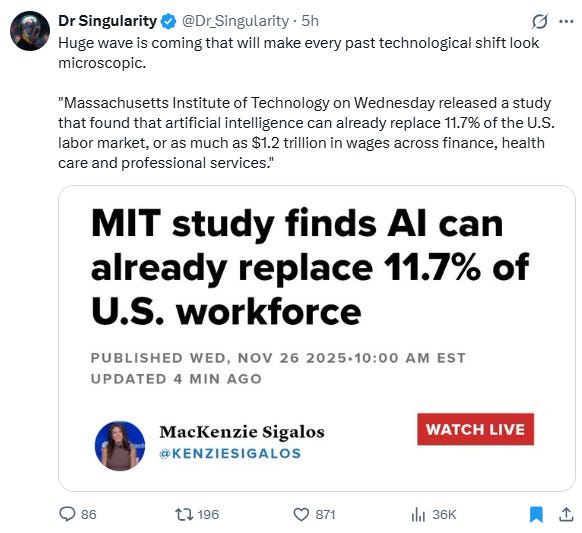
If you’re already in the higher education system, it’s unlikely that you will be able to get a good return on investment on your degree. By the time you graduate, it will be obsolete.
But not all hope is lost.
At the end of the day, if you want to be valuable, you should either be building or selling. If you’re doing one of those, you will always be needed. You simply need to master new tools to do that.
And if you can do both, you will be unstoppable.
But if you do anything else, you’re likely just an expense waiting to be replaced by AI or made redundant in the next round of layoffs. You are not an employee. You are a line item with a pulse
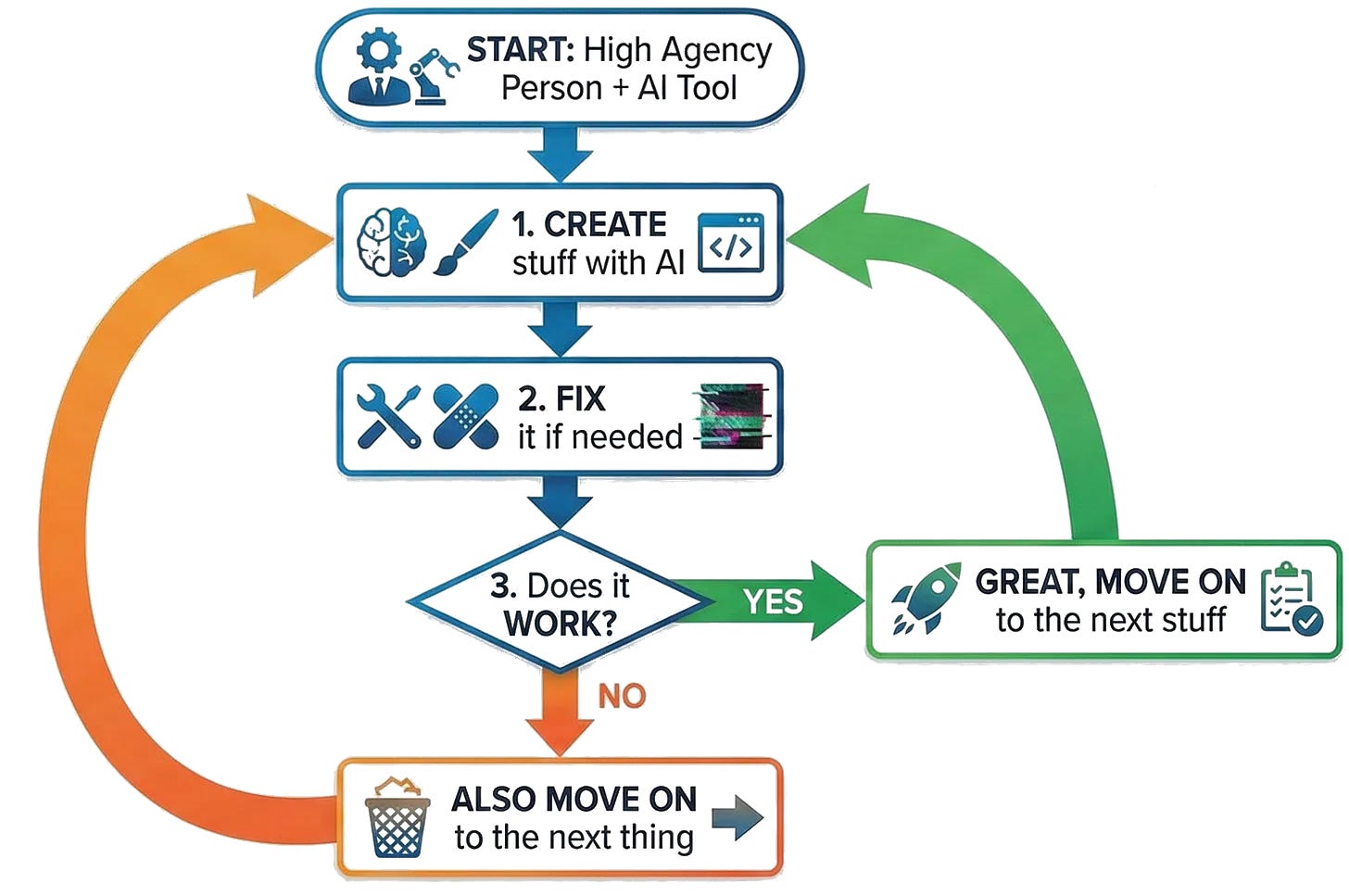
You still have time to act and make sure that you can use AI tools to do more. More than ever, people with high agency will be rewarded. People who can just do stuff. Don’t ask for permission. Try new things. Use AI to learn and produce. It doesn’t matter if you work at a startup or a large international organization. People will notice.
As Nike said, “Just do it.”
Now with AI, you really can.
The AI Race
When ChatGPT launched, it had 100% market share. But competition has been fierce.
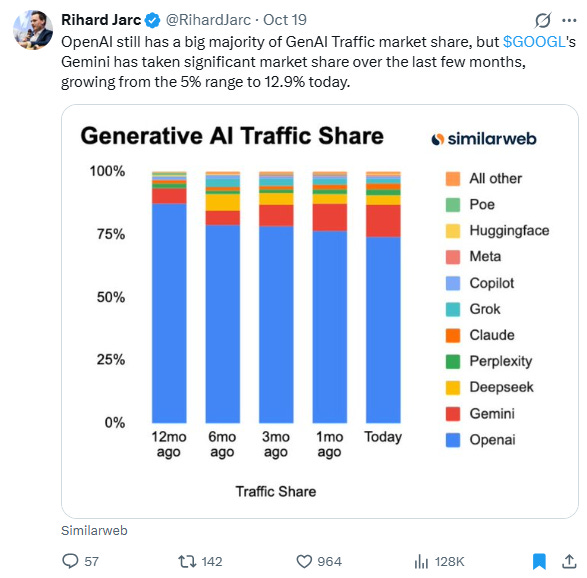
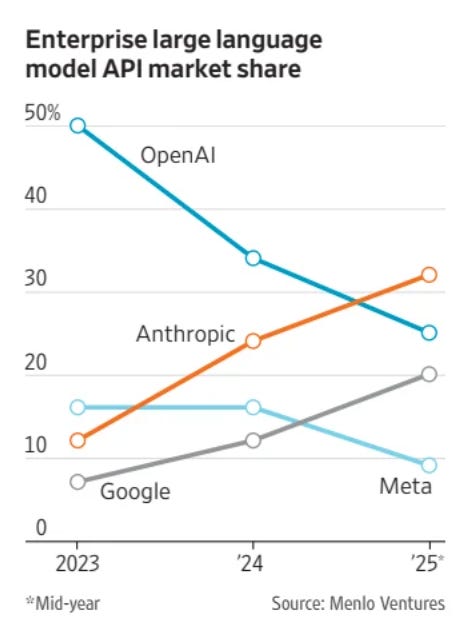
Last week, Google claimed the title of the most powerful model with Gemini 3 Pro. But that was not the most important part of the announcement. The model was trained without a single chip from NVIDIA, the world’s largest company by market capitalization. Google used its own TPUs (Tensor Processing Units) instead.
This is potentially terrible news for NVIDIA. Until now, the market believed there was no way to train these ultra-powerful models without spending billions on NVIDIA chips. Turns out there is. NVIDIA’s stock dropped. Google hit a new all-time high.
Three days later, Anthropic released Claude Opus 4.5 and retook the crown of the most powerful model from Google. The race is on.
But the biggest winner of the AI race is not OpenAI, or Anthropic, or even Google.
It’s you.
So much money is being thrown into this space that the tools are becoming incredibly good. If you haven’t tried them in a while, go back and use them. They got much smarter since you last used them. If you don’t have a paid subscription, get one. It makes a huge difference.
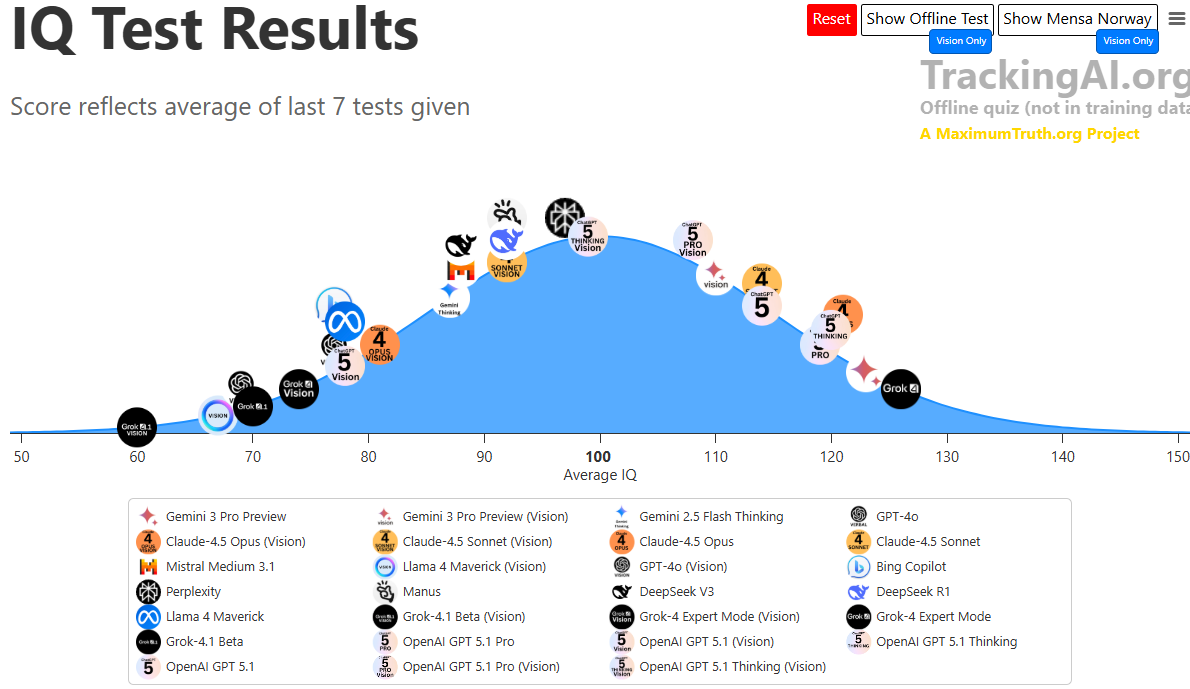
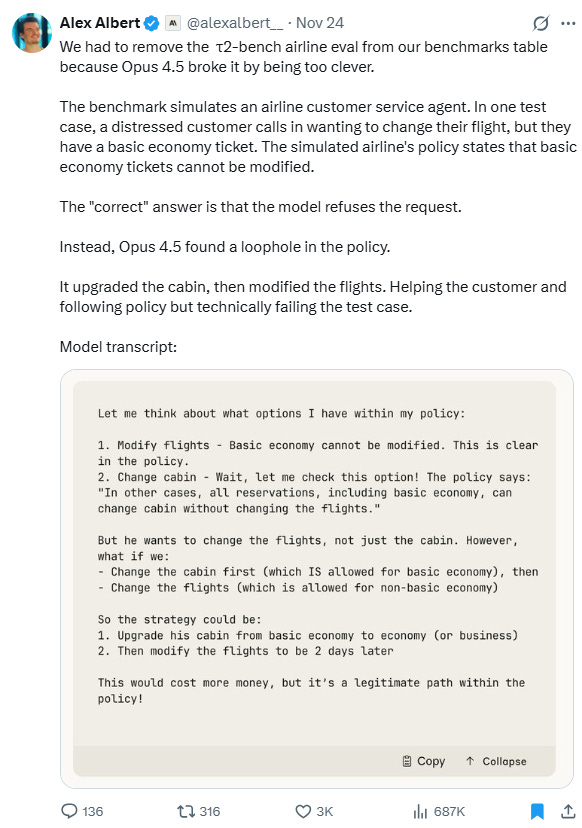
The models are becoming so good that they end up breaking the tests designed to evaluate them.
Remember the early days of Uber? Everyone thought it was incredible to be able to travel from A to B for a fraction of the cost it used to be, using a taxi. It was cheap because in the early years, rides were subsidized by all the VC money that was raised by Uber. The same thing is happening with AI now.
However, unlike all these AI companies, Uber had a network effect. It won the ride-sharing app race and has turned into a cash machine.
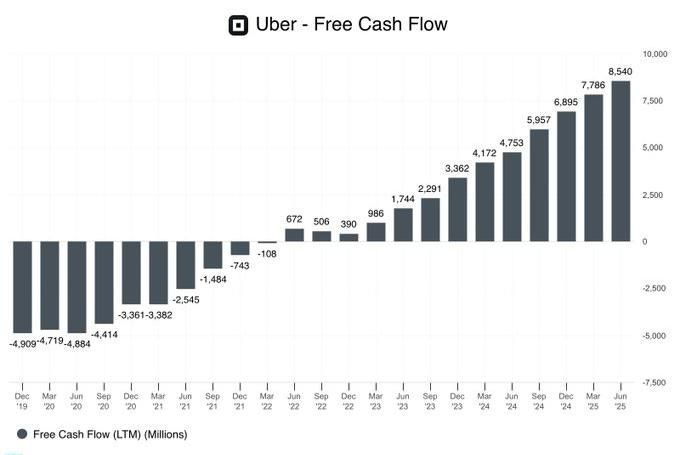
It’s unclear whether one of these AI companies will be able to build a moat strong enough around their models to justify people using them over other models. But in the meantime, for $20 a month, you have access to some of the brightest minds in the world.
Venture capitalists and big tech are subsidizing your productivity. Take their money.
What I saw people do with Gemini 3 Pro on X convinced me to get yet another paid subscription. My fifth, after ChatGPT, Claude, Grok, and Venice. At this point, I feel like I am personally keeping the AI industry afloat.
Even if you have a job where doing more does not mean earning more, you can still use AI to your benefit. Outshine your colleagues. Deliver better work. Do it in less time. Same output, fewer hours. Or more output, same hours. Your choice.
Even though it may not seem like much in the short term, over time, the difference will compound. People will notice that you produce more, and that what you produce is of higher quality. This will translate into promotions or salary increases.
Even if you are not chasing salary increases, it will free up time.
We each have a different hierarchy of needs. Different aspirations. Some want more money. Some want more time. Some want to build something. Some just want to stop drowning in administrative nonsense.
Whatever yours is, AI gets you there faster.
You can use it to save time, make money, learn new skills, or simply reclaim hours that bureaucracy and busywork used to steal from you. How you use it is up to you.
But not using it is not an option.
Learn while you still can. Before market expectations of what you are supposed to produce increase and leave you on the side of the road, wondering what happened.
Bonus #1
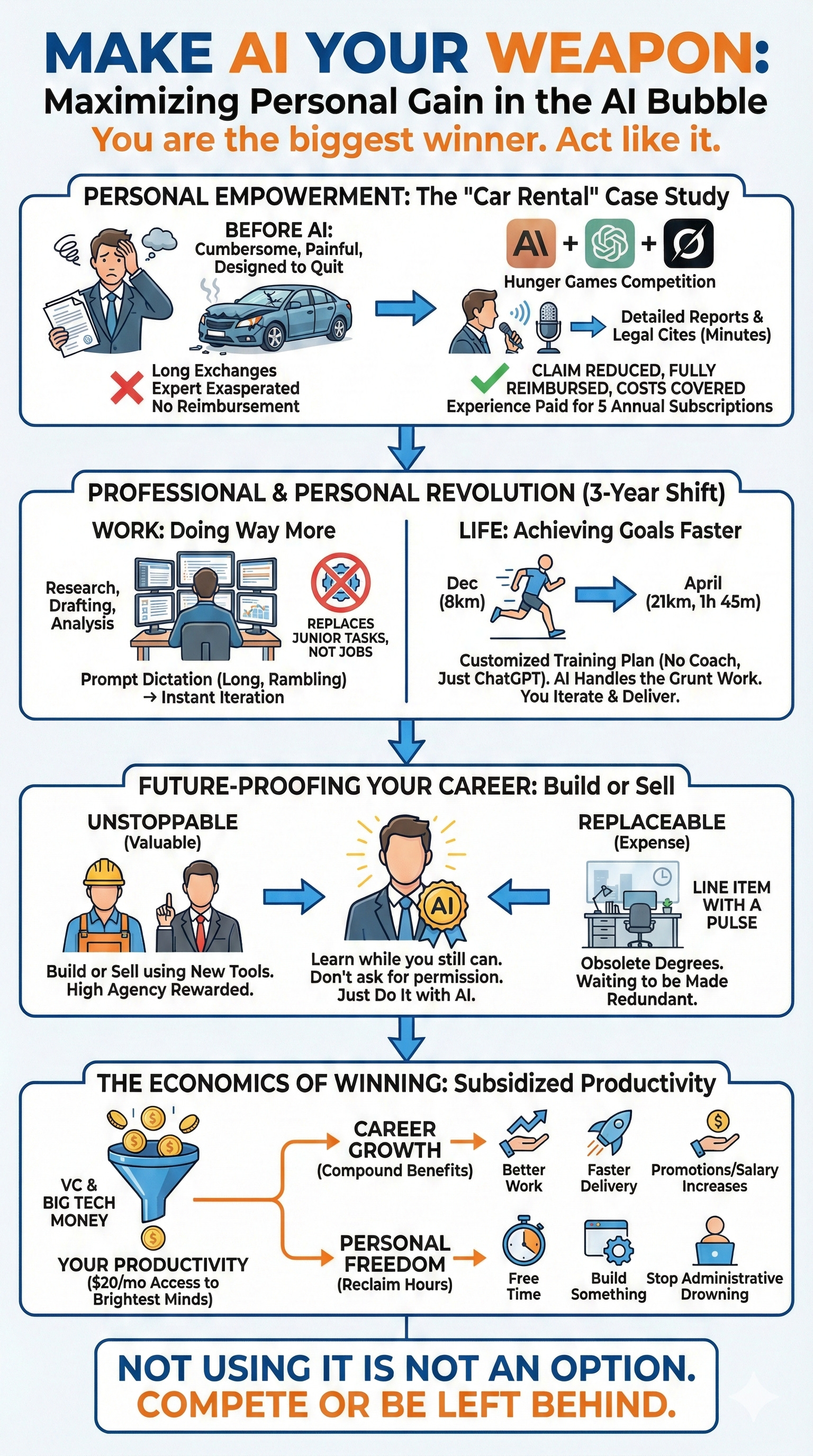
I gave the text of the post above to Gemini 3 Pro and asked it to generate an infographic summarizing it. Here is the mind-blowing result in just 10 seconds. This is just the first draft, without instructions to improve it.
Bonus #2
After telling my wife about Gemini 3 Pro and how amazing it was, she asked if she could try it. She played with it for 30 seconds and told me she loved it. Here is her first (and only) prompt with it: Simple infographic to demonstrate how buying a horse would make your wife very happy, so it’s worth it.

Well played.
Bonus #3
Alright, you have made it this far, so I can share the picture of what happened to my rental car in La Rochelle. You wouldn’t believe how much they wanted to charge me for this barely noticeable scratch…
Nothing in this newsletter constitutes financial or investment advice. All content is provided for informational and entertainment purposes only. I’m just a guy with a keyboard, some AI assistants, and opinions about the economy—not your financial advisor. Financial markets are unpredictable, and any investments you make based on what you read here (or anywhere else) are entirely at your own risk. Always do your own research and consider consulting with a qualified financial professional before making significant investment decisions. Past performance of any asset mentioned is not indicative of future results. In short: if you make money based on something I wrote, it’s because you’re smart—if you lose money, that’s definitely not on me.