
Rock, Paper, AI
Three contestants. One winner. And it’s not who you think.

“By failing to prepare, you are preparing to fail.”
Benjamin Franklin
Over the Christmas break, I found myself playing Rock, Paper, Scissors with younger family members. Again and again and again. Children have an inexhaustible appetite for repetition that would break most adults.
The French call it “Pierre, Feuille, Ciseaux.” Same game. Same elegant simplicity. Each choice beats one opponent and loses to another. No single strategy dominates. Victory is cyclical.
Somewhere around the fortieth round, my mind wandered. Then it hit me. This is exactly how the battle for value works.
Rock is gold. The 5,000-year-old store of value that central bankers publicly dismiss as a “barbarous relic” while quietly hoarding it like Smaug in his mountain.
Paper is fiat currency. Dollars, euros, yen. Government IOUs backed by the full faith and credit of politicians who can’t balance a budget.
AI is the new player. The modern version of scissors. The deflationary force that is supposed to render everything else obsolete.
2025 was supposed to be the Year of AI. The year when artificial intelligence would dominate portfolios, conversations, and returns. By many measures, it was the Year of AI.


But it’s a shiny yellow metal that does absolutely nothing that outperformed nearly everything else. And it’s not just in 2025. Since January 2000, gold has smashed the S&P 500, even after taking into account dividends received (Total Return below).
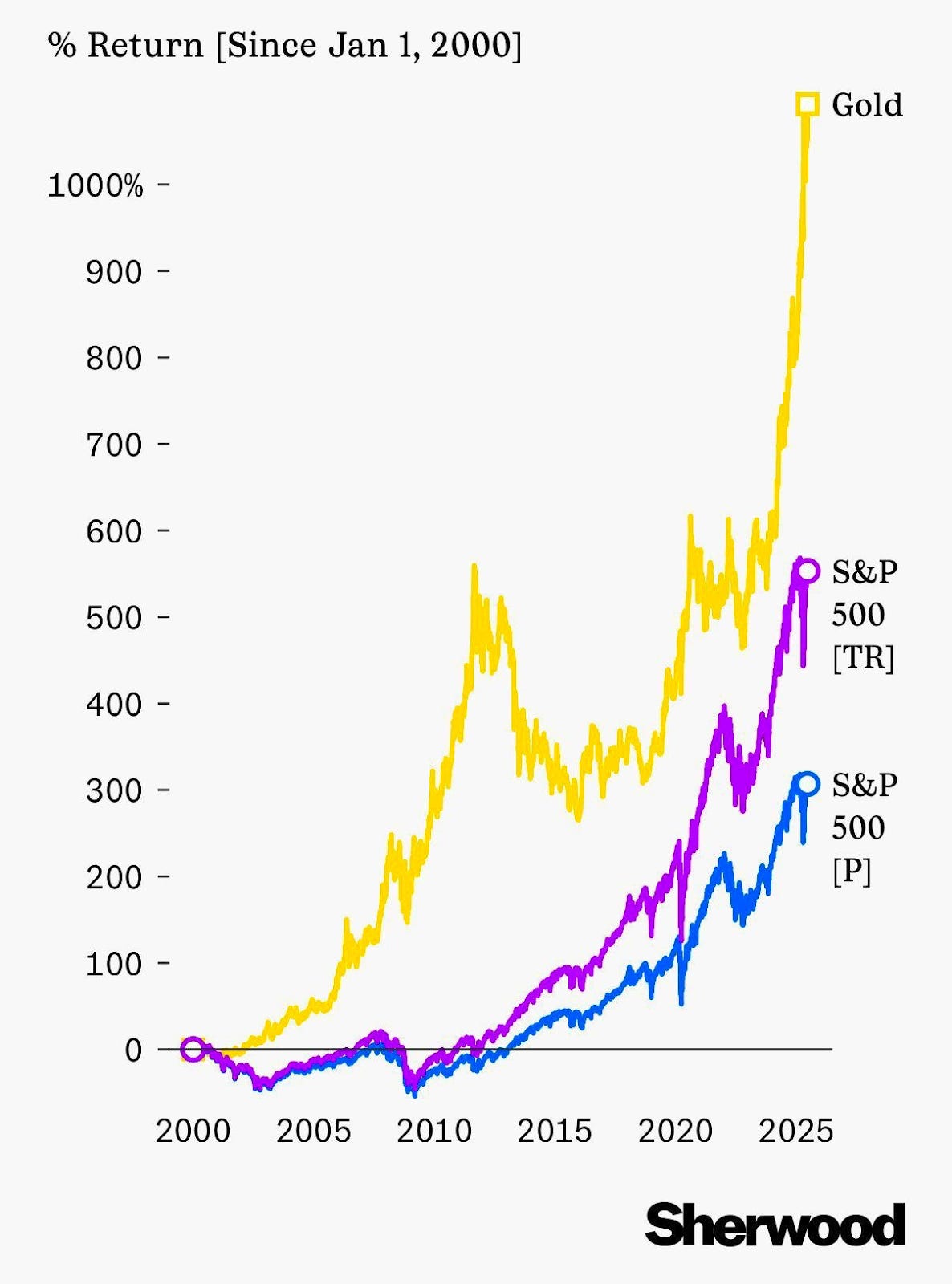
If you’re confused about how the most primitive asset beat the most advanced technology, you’re not alone. But if you understand the rules of the game, the outcome makes perfect sense.
Let me walk you through the tournament.
The Contestants
Rock (Gold)
Age: 5,000+ years of continuous use as money. For context, that’s roughly 50x longer than the age of the Federal Reserve.
Track record: Has outlasted every fiat currency ever created. Every. Single. One. The Roman denarius. The French Assignat. The German Mark. The British Pound. The US Dollar. Gold watched them all die or lose 99%+ of their value.
Weakness: Generates no yield. Does nothing. Boring at dinner parties.
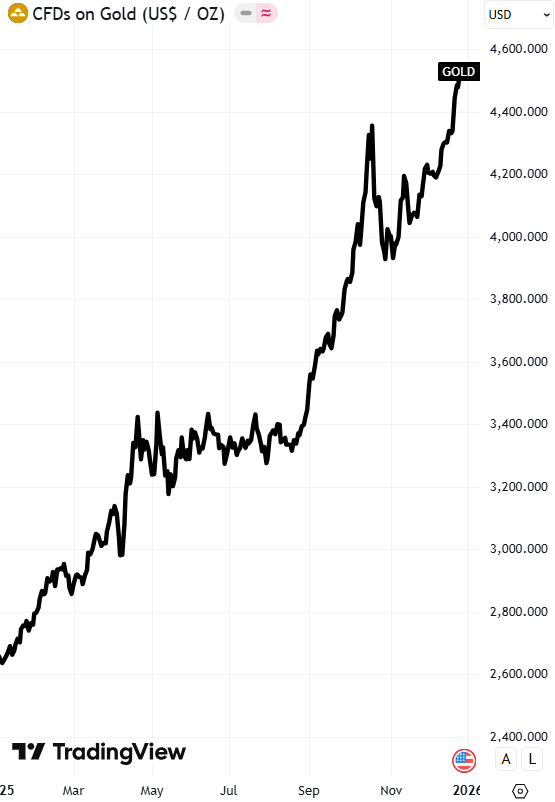
2025 performance: Up about 70%. Not bad for a pet rock.
Paper (Fiat Currency)
Age: 54 years in its current untethered form, since Nixon “temporarily” suspended the gold window in 1971.
“Nothing is more permanent than ‘temporary’ arrangements, deficits, truces, and relationships; and nothing is more temporary than ‘permanent’ ones.”
Nassim Nicholas Taleb
Track record: 100% failure rate over sufficient time horizons.
Strength: Governments have guns. They can compel you to use their paper. This is called “legal tender laws.”
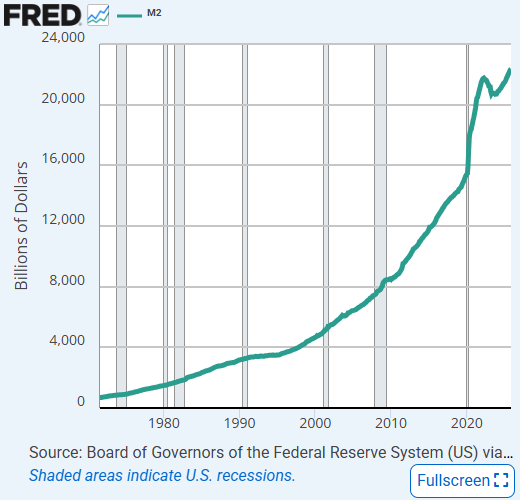
Weakness: Unlimited supply. The cardinal sin of money. If you can create infinite units of something, it cannot store value.
AI (Artificial Intelligence)
Age: 3 years since ChatGPT launched the revolution.
Track record: Too early to determine. Ask again in a decade.
Strength: The most powerful deflationary force since the steam engine. Makes everything cheaper, faster, better.
Weakness: AI companies burn cash at rates that would make a US defense contractor blush. And there’s no evidence these companies can build moats. When your product can be replicated by a competitor in months, you don’t have a business. You have a feature.

Round 1: Rock vs. Paper
Traditional economics tells you Paper wins this matchup. Gold is an archaic relic. It doesn’t generate interest or dividends. It doesn’t compound. It doesn’t create value. It just sits there, being yellow and dense.
Warren Buffett famously mocked gold investors. You dig it out of the ground somewhere, ship it across the ocean, and bury it again in a vault in Manhattan or London. The whole exercise seems rather pointless.
And yet.
The US dollar has lost over 99% of its purchasing power against gold since 1971. The euro has lost more than 90% since its launch in 1999. If this is Paper winning, I would hate to see what losing looks like.
Nixon promised the gold window closure was temporary. The Fed promised inflation was transitory. Governments promised deficits would shrink. Notice a pattern?
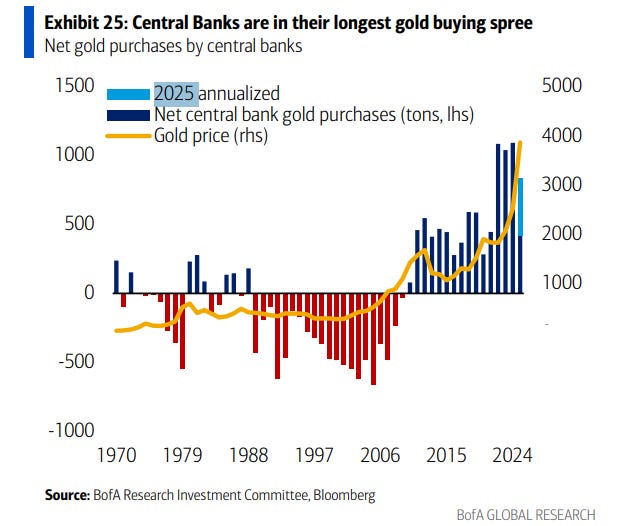
Central banks clearly believe gold is important. They have been accumulating it at the fastest pace in decades. They tell the public gold is a useless relic while quietly adding to their own stockpiles. In any other context, we would call this behavior suspicious.
Even the IMF is now advertising the merits of gold.


Winner: Rock
Round 2: Paper vs. AI
This should be a massacre. AI is the ultimate deflationary force. It makes knowledge workers more productive. It automates routine tasks. It compresses the cost of producing everything from legal briefs to marketing copy to software code.
I recently used it to fight a car rental agency in France:

And of course, there was Caitlyn Vanneu:

When you can produce more with less, you need less money circulating to facilitate the same economic output. Deflation. You get more for less. Great, right?
Not quite.
Here’s what will actually happen.
AI will eliminate jobs. Not all jobs. But enough (white collar) jobs to create political panic. And when politicians panic, they reach for the only tool they understand: the printing press.
Universal Basic Income trials. Stimulus checks for displaced workers. Retraining programs that accomplish nothing but keep bureaucrats busy. Emergency measures that become permanent fixtures.
Whether central banks call it Quantitative Easing, Balance Sheet Expansion, or, brace yourself, Reserve Management Purchases (the latest fancy name for the $40 billion-a-month operation started by the Fed on December 1st, 2025), it is all the same thing: money printing to finance budget deficits.
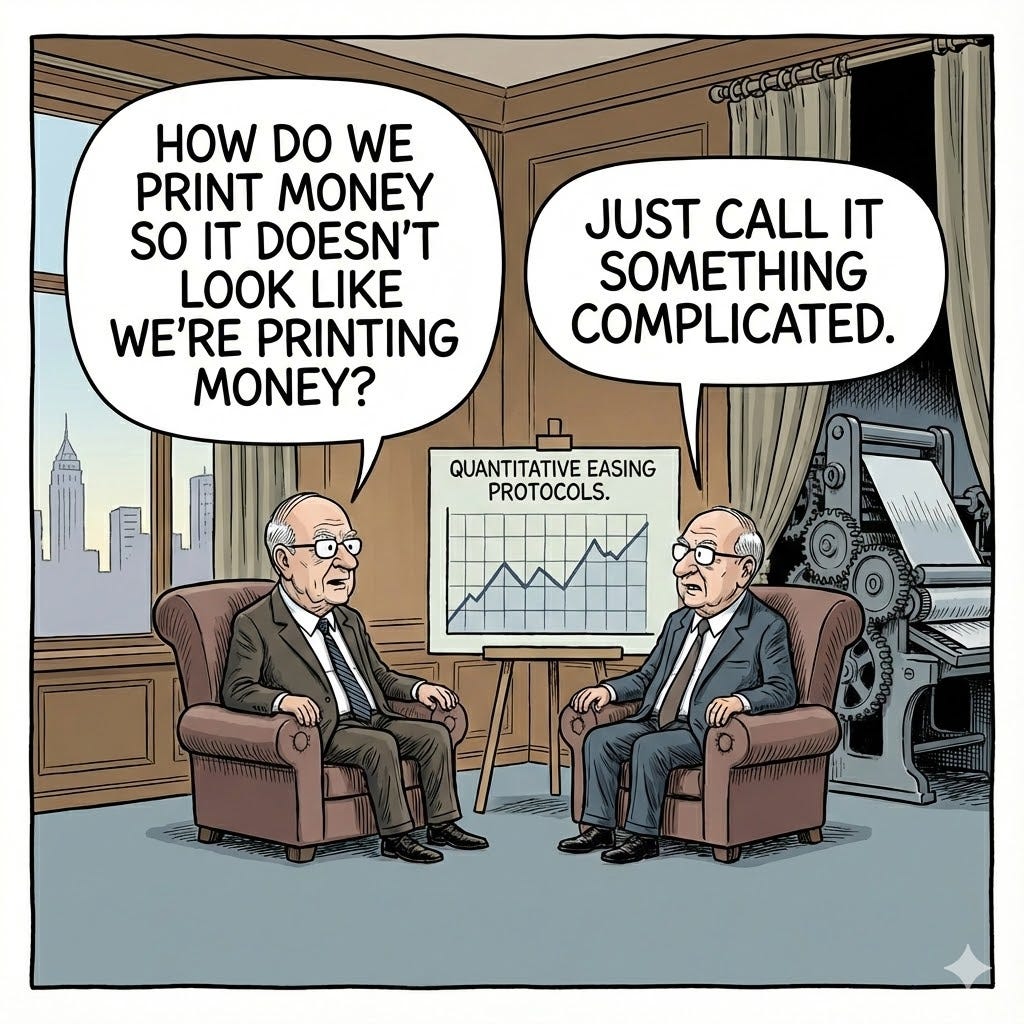
AI doesn’t beat Paper. AI gives Paper an excuse to multiply. More artificial intelligence means more unemployment anxiety means more stimulus means more paper.
Meanwhile, AI companies are in a race to zero, where the commoditization of their models is the most likely outcome at the moment, meaning no extraordinary profits in sight.
Winner: Draw (Both lose in real terms)
Round 3: Rock vs. AI
Now we arrive at the 2025 paradox.
The year began with breathless predictions about artificial intelligence. Every portfolio manager wanted AI exposure. Every analyst projected which companies would dominate the new economy. CNBC couldn’t go five minutes without mentioning Nvidia.
Gold was barely mentioned. It was your grandfather’s asset. The thing you buy when you’ve given up on growth.
Twelve months later, gold has outperformed most AI-focused investments and had its second-best year since the end of the gold standard.


How does a metal that has been unchanged for millennia beat the most transformative technology of our generation?
Because at the moment, gold wins in the two scenarios that matter to investors.
Scenario A: AI causes deflation, and governments allow it. Asset prices fall. Cash becomes more valuable. But gold is the oldest form of cash. It has no counterparty risk. When paper assets deflate, gold holds its purchasing power.
Scenario B: AI causes deflation, and governments print to offset it. This is the more likely path. Deflation creates unemployment. Unemployment creates angry voters. Angry voters create desperate politicians. Desperate politicians create money printing.
The only scenario in which gold loses is when governments accept deflation, unemployment, and the associated political consequences, and do nothing.
The probability of that happening is very easy to compute.
But inflation fears alone didn’t propel gold to $30 trillion. Something else did. And if you want a more realistic answer, the financial media is not where you will find it…

AI companies are burning billions trying to be the first to get to Artificial General Intelligence. Gold just sits there. Turns out, doing nothing beats burning cash.
This is not an argument against AI. The technology will transform the world. So did railways in the 19th century. So did the internet in the 1990s. But most investors in those revolutions lost money.
Being right about the technology is not the same as making money on the technology.
Winner: Rock
Rock Gets an Upgrade
I could end here. Gold wins. Buy some coins. See you next month, or next year, or next decade.
But there’s an upgrade available.
Imagine you could take all of gold’s properties and improve them. Mathematically verifiable scarcity instead of estimated scarcity. Instant global transferability instead of armored trucks. Perfect divisibility instead of trying to melt gold bars. Seizure resistance that doesn’t require hiding coins in your mattress.
You know where this is going. Bitcoin.
You might object that Bitcoin is volatile. That it’s speculation. That it’s internet money for criminals and tech enthusiasts.
Gold was also volatile when it was remonetizing post 1971. Gold was also “speculation” when Nixon closed the window. And criminals have been using cash since cash was invented.
Here’s what actually matters.
Gold’s scarcity is geological. We think there’s only so much gold on Earth. We estimate annual production. We trust mining companies to report accurately. We hope nobody discovers a massive new deposit or figures out asteroid mining.
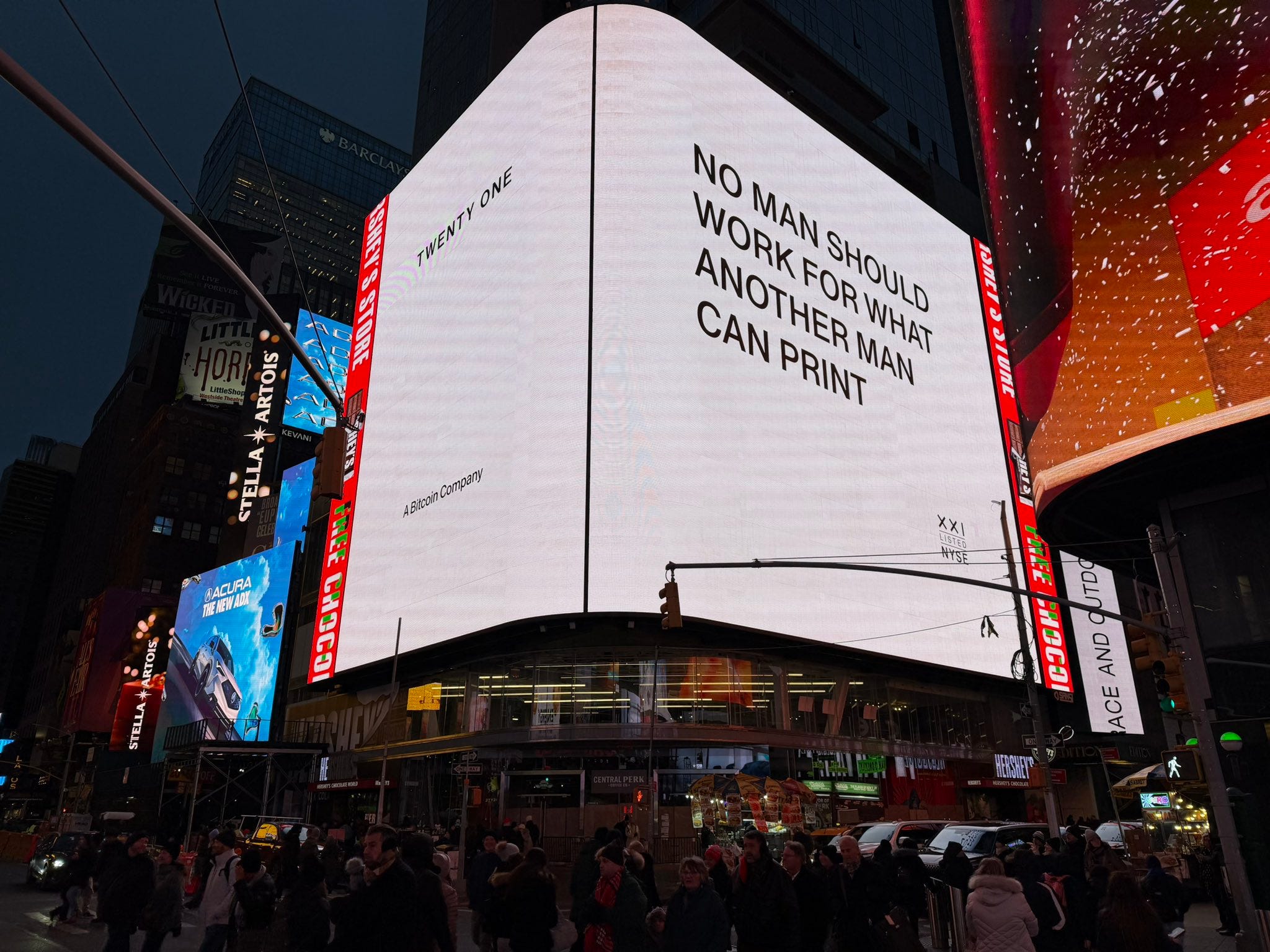
Bitcoin’s scarcity is mathematical. There will only ever be 21 million Bitcoin. Not because someone promised. Not because a government decreed it. Because the code enforces it, and anyone can verify it.
Nobody knows if the gold is really in Fort Knox. Everyone knows exactly how many Bitcoin exist. The ledger is public. The audit happens every ten minutes.
Why Bitcoin Is the AI Trade
Here’s where it gets interesting.
If the thesis that AI-induced deflation will trigger unprecedented money printing is correct, you want the asset most sensitive to monetary debasement.
Gold has a 5,000-year track record of responding to debasement. It works. But gold typically moves slowly. It’s a supertanker. Bitcoin is a speedboat.
In 2025, even the supertanker broke speed records. Imagine what happens when the speedboat catches the same wind.
When money printing accelerates, Bitcoin tends to respond faster and more dramatically. This is the volatility people complain about, but volatility in your favor is just another word for returns.
Bitcoin is up roughly 220x since I first wrote about it close to ten years ago. Gold is up perhaps 3x. Both are playing the same game. Bitcoin has been playing this game for just 17 years, so it is still in its adoption phase.
The critics will point to Bitcoin’s drawdowns. Yes, it fell 80% multiple times. So did Amazon. So did every transformative asset before the world understood what it was looking at. Volatility is the price of admission for asymmetric returns.
Consider the setup.
AI will be deflationary. Governments will not tolerate deflation. Governments will print. Bitcoin is the most sensitive instrument to capture that printing.
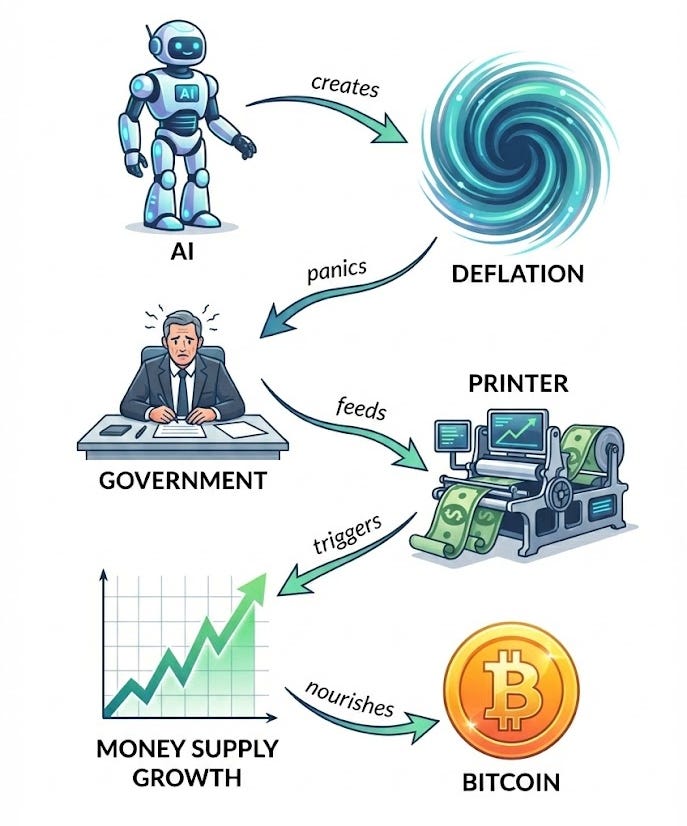
You don’t have to believe in Bitcoin as the future of money. You just have to believe that politicians will print rather than accept unemployment.
Championship Result
Rock wins.
But Rock has evolved.
Gold is Rock Classic. It works. It has always worked. It will continue to work. If you own none, you should probably fix that.
Bitcoin is Digital Gold, or Rock 2.0. Cryptographically secured. Verifiably scarce. Natively digital. Better suited for an age where value moves at the speed of light and governments print at the speed of panic.
The tournament bracket is clear.
Rock beats Paper. Always has. Always will.
Paper ties AI. AI accelerates the printing press, but AI companies can’t make money. Both lose in real terms.
Rock beats AI. The primitive outlasts the sophisticated.
Rock matchup: Digital Gold (Bitcoin) vs. Physical Gold. Both win.
Rock, Paper, New Technology
Same game humanity has always played. New contestants. Same winner. Better version of the winner now available.
Gold doesn’t care about your politics. It doesn’t care about your central bank. It doesn’t care about your AI models or your productivity projections.
Bitcoin cares even less. It’s just math. Math doesn’t negotiate. Math doesn’t compromise.
The winning strategy in Rock, Paper, Scissors is to be unpredictable. Your opponent cannot exploit a pattern that doesn’t exist.
The winning strategy in Rock, Paper, AI is simpler.
Own what cannot be printed. Own what cannot be prompted into existence. Own what has no counterparty risk.
Then convert some of that to the version designed for the digital age. The version that exists natively in a world where AI generates everything except scarcity itself.
The game continues. The players change. The outcome doesn’t.
Rock wins.
Nothing in this newsletter constitutes financial or investment advice. All content is provided for informational and entertainment purposes only. I’m just a guy with a keyboard, some AI assistants, and opinions about the economy—not your financial advisor. Financial markets are unpredictable, and any investments you make based on what you read here (or anywhere else) are entirely at your own risk. Always do your own research and consider consulting with a qualified financial professional before making significant investment decisions. Past performance of any asset mentioned is not indicative of future results. In short: if you make money based on something I wrote, it’s because you’re smart—if you lose money, that’s definitely not on me.